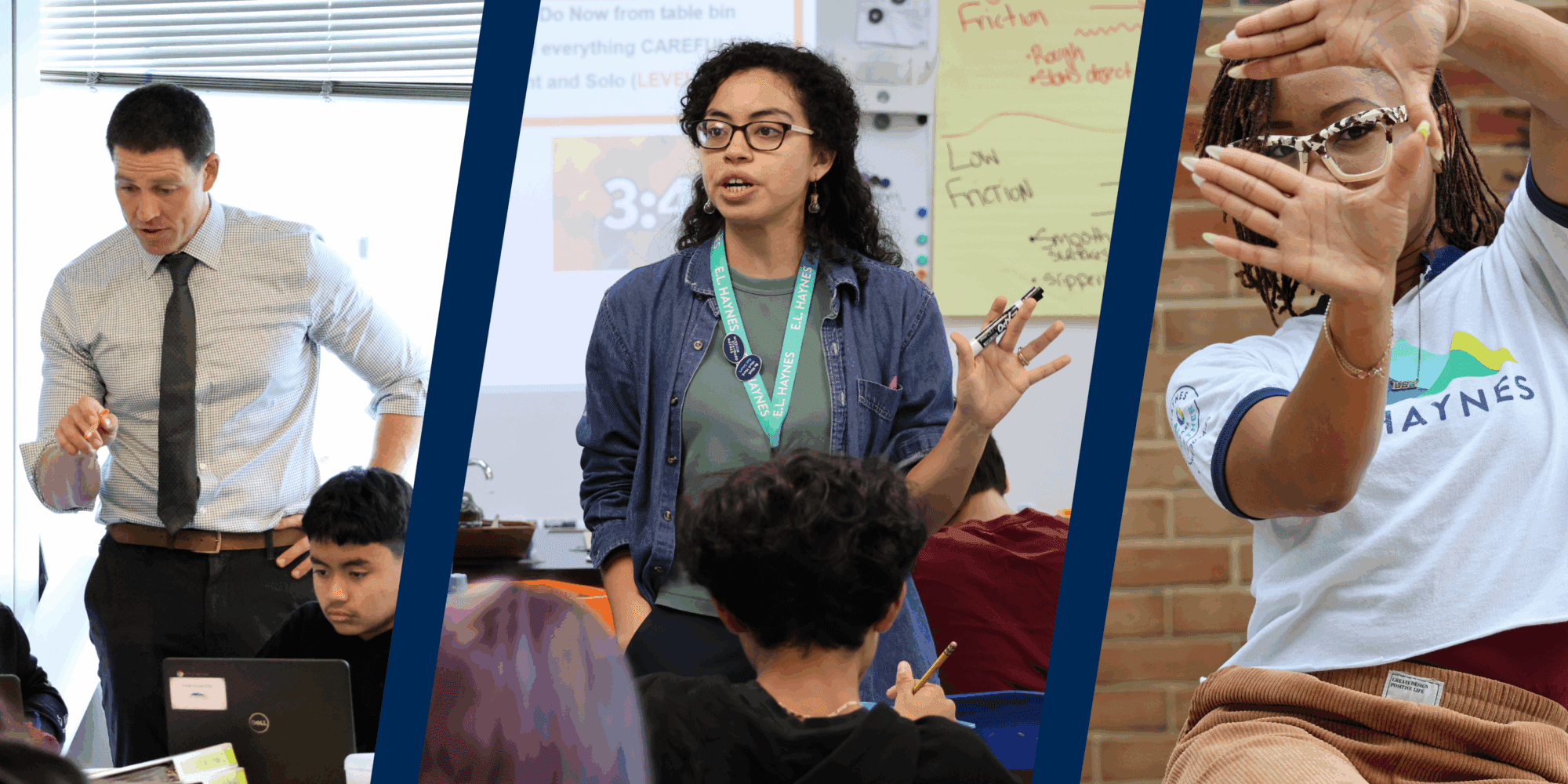
Inspired by Zaretta Hammond, three exemplary teachers show what it means to be cognitive coaches—and how others can join the journey.
At this year’s All-Staff Institute, we intentionally brought our entire team together to hear from Zaretta Hammond—because this work is core to our role as educators. Hammond challenged us to think of ourselves as “personal trainers for students’ cognitive development.”
Her message was clear: preparing students to be problem-solvers—not just regurgitators of information—is essential to preparing them for life beyond school. Helping students build stamina, persistence, and the ability to think critically is not just good teaching; it’s what ensures they are equipped to thrive in a complex world.
That message resonated deeply with our staff. It affirmed what so many of us already believe: the work we do every day has significance far beyond a single lesson or unit. From science labs to dance studios to math classrooms, every space can be a training ground for the mind.
This month, we’re spotlighting three teachers across grade levels who embody Hammond’s vision. Their classrooms show us what it looks like to build stamina, foster independence, and coach students through challenges. And their stories remind us that every adult in the building can play a role in stretching students’ thinking.
Exemplary Teaching in Action
Elementary School: Building Confidence Through Dance
For nine years, DeAunna Blackwell has taught dance at E.L. Haynes while also helping lead student culture and coordinating across campuses. In her elementary classes, she sees herself as more than a dance teacher—she’s a coach for confidence, self-expression, and persistence.
“Don’t skip the steps, the height will come. Focus on the technique,” Ms. Blackwell frequently reminds students. “Greatness will not be achieved by magic! It’s a process,” she tells her students, encouraging them to embrace the process. Whether it’s first graders learning and practicing the “Spanish Guitar” dance to explore how emotions show up in their bodies, or students learning to advocate for themselves and take up physical space with confidence and ease, Ms. Blackwell creates a safe space where students learn that growth takes time, ownership, and effort.
Her classroom workouts go beyond pliés and turns. Students practice teamwork in games like “Hugs,” strengthen self-control by upholding community norms, and build emotional stamina by connecting movement to real-life experiences. In Ms. Blackwell’s words: “It’s bigger than dance—it’s about becoming more confident, empathetic humans.” And that’s what makes her classroom a training ground not only for art, but for life.

“Don’t skip the steps, the height will come. Focus on the technique; greatness will not be achieved by magic! It’s a process.”
DeAunna Blackwell, Elementary School Dance Teacher
Middle School: Leaning Into Productive Struggle
In the middle grades, Stephanie Vela-Vignola (Mrs. V.-V.), eighth grade science teacher, is known for sparking curiosity and then letting students wrestle with tough questions.
She starts each unit by hooking students with a phenomenon—like a missing space pod—then steps back, letting them explore, hypothesize, and even make mistakes. “There’s no right or wrong at that moment,” she explains. “It’s about what you think. And that struggle is where the learning happens.”
Her approach is equal parts high expectations and high support. For all students, including multilingual learners and students with IEPs, she provides scaffolds like sentence starters, ensuring they do the cognitive heavy lifting themselves. One student, after weeks of daily back-and-forth over vocabulary, proudly earned an A– on their science exam—and insisted their test be hung on the wall for all to see.

“If students are grappling with ideas and thinking for themselves, then I feel like I’m doing my job.”
Stephanie Vela-Vignola, Middle School Science Teacher
For Mrs. V.V., building mental stamina is the ultimate workout: “It’s the ability to persevere through difficult concepts, to believe you can figure it out. That’s a muscle we have to help kids practice every day.” In her class, science becomes more than content—it’s practice in persistence and precision, skills that will serve students in any challenge they face.
High School: Training Problem-Solvers in Math
At the high school level, Will Stafford, who teaches geometry and calculus, has spent 15 of his 18 teaching years at E.L. Haynes. He thrives on guiding students toward rigor and independence.
Teaching AP Calculus has shaped his philosophy. The nationally recognized exam sets a clear standard—and his classroom mirrors that. Students take “perfection quizzes” multiple times until they master the material, and geometry projects challenge them to create intricate art with nothing but equations of circles.
But beyond equations, Mr. Stafford sees his role as coaching persistence. “I want students to take ownership of their learning,” he shared. “I try to help create a feedback cycle that helps them take responsibility for doing the hard work and taking ownership of their understanding.“ That mindset especially shows during AP exam season, when students opt in to grinding through long study sessions, sometimes daily, until they’re ready.
In his words, math is not just about getting the right answer: “I want students to build a toolbox—critical thinking, resourcefulness, conceptual depth. Whether you’re doing taxes or learning new software, you need to know how to learn hard things.” Mr. Stafford frames his classroom as a training ground where students learn not just math, but how to face the kinds of complex, real-world challenges that lie ahead.
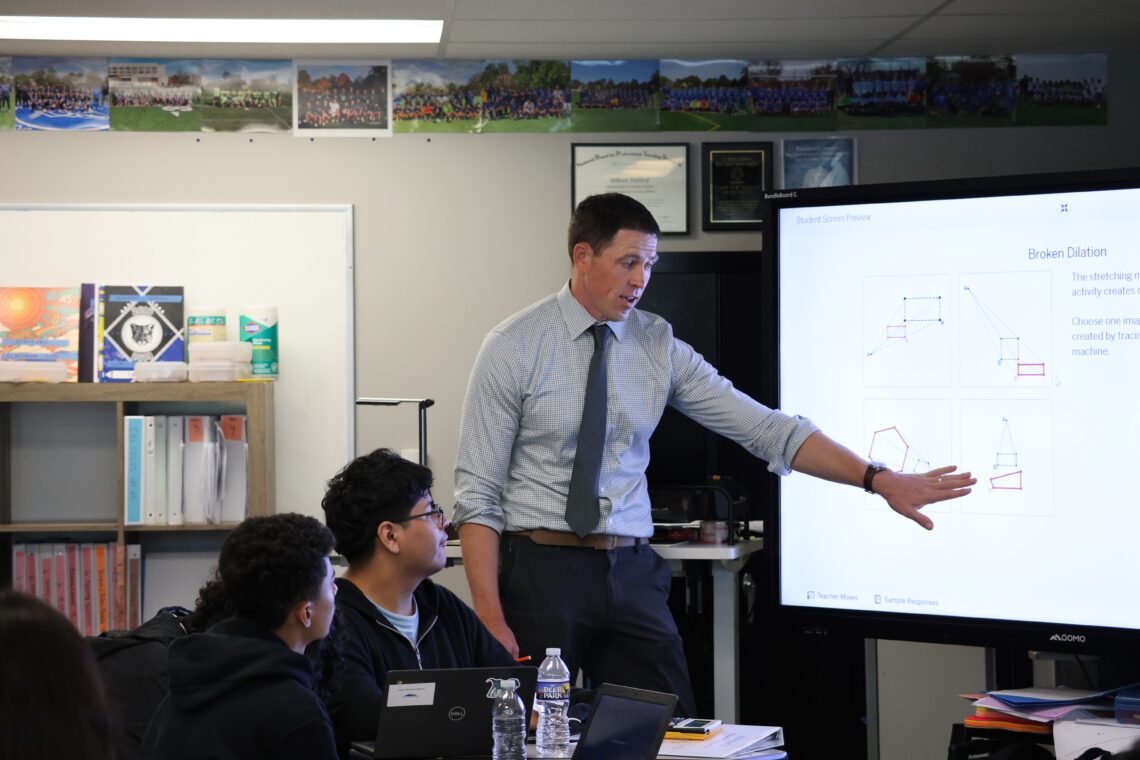
“I want students to take ownership of their learning. I try to help create a feedback cycle that helps them take responsibility for doing the hard work and taking ownership of their understanding.”
Will Stafford, High School Math Teacher
The Bigger Picture: A Culture of Cognitive Coaching
What unites these three teachers—across subjects as different as dance, science, and calculus—is their shared belief that cognitive skills are built everywhere.
In Ms. Blackwell’s studio-classroom, it’s confidence and community. In Mrs. V.-V.’s lab, it’s resilience and scientific precision. In Mr. Stafford’s math classes, it’s persistence and problem-solving. Each teacher shows that learning is not passive—it requires grappling, stamina, and ownership.
And this work doesn’t belong only to teachers in core subjects. Every adult in the building—from aftercare staff to office managers—can help students practice the habits of curiosity, self-control, and critical thinking. Together, we are building a culture where brain training happens in every hallway and classroom.
As CEO Toni R. Barton puts it: “Excellence at Haynes means every adult sees themselves as a coach for student thinking, no matter the setting.”
Join the Learning
This week you’ll see Zaretta Hammond around campus, observing classrooms and experiencing our instructional landscape in action.
Starting in later this month, teachers can participate in monthly professional development sessions with Hammond. These aren’t one-off workshops. They’re part of a year-long partnership designed to build educators’ skills and confidence as cognitive coaches.
Think of it as training for the trainers: ongoing practice, real-time feedback, and a supportive community of colleagues. By the end of the year, every educator who joins will be stronger, more confident, and more intentional in how they stretch students’ brains. To learn more, connect with your school leader.
From dance to science to math, our teachers show that building students’ cognitive strength takes practice, persistence, and coaching. They remind us that every classroom—and every adult—can be part of that work.
With Hammond’s partnership and the dedication of our educators, we are building a school where every student is guided by a coach who believes in their growth. Together, we’re not just teaching lessons—we’re training minds for a lifetime of learning.